Getting around Eswatini is refreshingly straightforward — the kingdom is one of the smallest countries in Africa (roughly the size of the Kruger National Park), drives on the left, English is an official language spoken widely throughout the country, and its road network is among the best maintained in the region. For South African travellers, Eswatini feels comfortably familiar in many respects — making it one of the most accessible and least intimidating international destinations on the continent, yet genuinely rewarding in its cultural richness and natural beauty.
The vast majority of South African visitors arrive in Eswatini by road — either on a day trip or short self-drive holiday from Gauteng, Mpumalanga or KwaZulu-Natal. The kingdom shares four border crossings with South Africa and one with Mozambique, all of which are generally efficient and well-managed. The most commonly used crossings for South African travellers are:
Oshoek/Ngwenya — the busiest and most convenient crossing from Gauteng on the N17 via Badplaas, approximately 3.5 hours from Johannesburg. This is the main entry point for most South African road-trippers heading to the Ezulwini Valley and Mbabane.
Jeppe’s Reef/Matsamo — a popular crossing from the Mpumalanga Lowveld, convenient for travellers combining Eswatini with a Kruger National Park itinerary. The crossing connects to the MR3 highway and the Ezulwini Valley.
Lavumisa/Golela — the main crossing from KwaZulu-Natal on the N2 north of Pongola, convenient for travellers entering Eswatini from the south and heading to Hlane Royal National Park and the Lubombo region.
Mahamba — a quieter crossing from KwaZulu-Natal, connecting to Manzini via the MR18.
Once in the country, a hire car or your own vehicle is by far the most practical and rewarding way to explore Eswatini. The kingdom’s main sealed highway — the MR3 running between the Ngwenya border crossing, Mbabane, the Ezulwini Valley and Manzini — is in excellent condition and forms the backbone of most self-drive itineraries. Secondary roads connecting the main highway to national parks, craft centres and more remote attractions are generally well-maintained and clearly signposted, though some routes to the more mountainous areas and the Lubombo region involve steeper gradients and narrower roads that require careful driving. A standard 2WD vehicle is perfectly adequate for the vast majority of routes within Eswatini — a 4×4 is only necessary for the most remote tracks within game reserves and the mountain regions.
Taxis are available in Mbabane and Manzini, though they do not use meters — always agree on a fare before departing. Shared minibus taxis (combis) run frequently between Mbabane, the Ezulwini Valley and Manzini at very affordable fares and are widely used by locals, though they can be crowded and timing is unpredictable. For most South African visitors, a hire car offers significantly more flexibility and comfort than public transport.
Within the Ezulwini Valley — where most of Eswatini’s main tourist attractions are concentrated — distances between lodges, craft centres, the Mantenga Cultural Village and the Mlilwane Wildlife Sanctuary are short and easily managed by car. The valley is well-signposted and compact enough to explore several attractions in a single day without long drives. Within Mlilwane Wildlife Sanctuary, the reserve is small enough to explore by mountain bike (available for hire at the rest camp) or on foot on guided walks — a refreshingly intimate and affordable wildlife experience unique to this community-oriented reserve.
For reaching Hlane Royal National Park in the northeast and the Mkhaya Game Reserve in the central Lubombo region, your own vehicle or a hire car is essential for the drive to the park gates. Note that Mkhaya Game Reserve does not allow self-drive within the reserve — all game viewing is conducted on guided game drives and walks in open vehicles operated by Big Game Parks, which manages the reserve. Access to Mkhaya for day and overnight visitors is arranged exclusively through the Big Game Parks central reservations office, and guests are met at a designated roadside meeting point from which the final transfer into the reserve is made by the camp’s own vehicles.
Eswatini’s only commercial airport — King Mswati III International Airport (SHO) near Manzini — handles limited regional flights. Royal Eswatini National Airways operates selected regional routes, and the airport handles some charter and light aircraft traffic. For most South African visitors, however, flying to Eswatini is unnecessary given the country’s short driving distance from Johannesburg, Durban and the Mpumalanga Lowveld — the overland journey is part of the experience and the border crossings are generally quick and efficient for South African passport holders.
A practical note on fuel and cash: fuel is readily available in Mbabane, Manzini and the Ezulwini Valley. The Swazi Lilangeni (SZL) is pegged at parity with the South African Rand, and South African Rand is accepted as legal tender throughout Swaziland at a 1:1 exchange rate — making Swaziland one of the most financially convenient international destinations for South African travellers, with no currency exchange required.
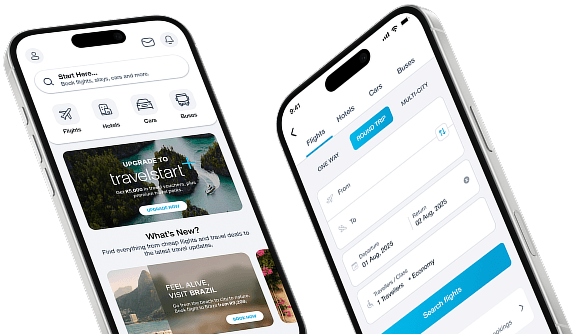
Planning to explore Eswatini’s valleys, wildlife reserves and mountain passes at your own pace? Search, compare and book a car hire for Eswatini at Travelstart and find the best rate for your Kingdom of Eswatini adventure.














 Bringing you the best fares from all airlines