China flights

Book cheap flights to China

Popular flights to China

Prices observed in the past 7 days start from R3889 one-way and R11339 round trip. Fares and availability may change at any time, and additional terms may apply.

Custom travel packages

Popular airlines to China

Why visit China
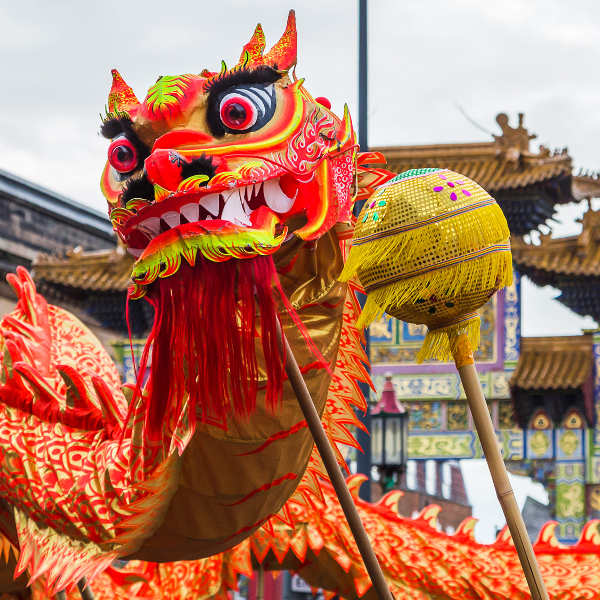
China dragon-festivals-china
China the-fallen-temples-china
China china-cuisine

China: the beating heart of Asia alive with lanterns, culture and mouth-watering dishes

Discover the beautiful country of China and fall in love with the abundance that it offers. China has etched its history and customs across the globe, with a population of 1.4 billion residents! Top attractions include The Forbidden City in Beijing, the Terracotta Museum in Xi’an and the Great Wall of China, which spans 6000 km’s across the country.

Cheap flights to China are now available for a limited period of time, so get ready to be engulfed by the attractions of this fascinating country! China is home to the capital city’s Beijing Capital International Airport (PEK), which is an estimated 45-minute drive to Beijing’s city centre. Beijing Capital International Airport serves a multitude of airlines – including Air China, Emirates and Ethiopian Airways. Non-stop international flights to Beijing departure from Johannesburg. Flight duration from Johannesburg to Beijing is approximately 14 hours.

Weather In China

Low
High °C
Rain-mm
Average temperature (°C) & rainfall (mm) per month

Frequently asked questions

Overview

The Chinese have a history that goes back more than 4000 years and was first introduced to the world through the writings of merchant traveller, Marco Polo. From their magnificent emperors in dragon-protected palaces to the beginnings of some of the world’s most famous form of martial art, Kung Fu, this vast country has a history like no other. The customs and traditions of the region have since travelled far and wide so a visit to this enchanting country is a definite for any traveller!

China has more than 600 cities and a population of just under 1.4 billion residents, so though one country, the people, faces, cuisine and landscapes are as diverse as you can imagine. One thing that you can count on is the fantastic cuisine that spans the country. Food consists of everything, including steaming bowls of noodles and rice, paper-thin dumplings and fried wontons, raw seafood and sweet and sour exotic meats – China has it all and so much more.

As for places to see and adventures to go on, you’ll never run out of options. From the busy local markets, to expansive rice paddy farms, to majestic mountain ranges and towering sky-scraper cities, you’ll find a bit of everything for every kind of traveller. Some of the country’s top attractions include The Forbidden City in Beijing, the Terracotta Museum in Xi’an and the Great Wall of China, with a length of 6000km across the country.

Compare several airlines, and book your cheap flights to China online at Travelstart!

Best time to visit China

China has four distinct seasons and goes from overly hot and humid in the summertime to icy cold in winter. Over the summer time the cities are really full and overcrowded, and it gets excessively hot and humid too. Winter is the polar opposite in terms of temperature and some regions are prone to snow. It is still really beautiful to visit, providing you dress accordingly. The best time to visit would have to be during spring time (March to early June). During this time there is little fog in the big cities, and it is pleasantly warm all over, without the overcrowding of the summertime tourists.

Visa & Customs

South Africans who wish to visit China will need a visa to do so. To complete your application you will need to submit two passport photos, a copy of your ID, proof of accommodation for your stay in the country, and various other documents. You will also need to ensure your passport is valid for at least six months from the date of your departure.

For more information, please contact the Embassy of China:

972 Pretorious St, Arcadia, Pretoria, 0083 Tel: 012 431 6500

Health & Safety

China is a really safe country as a whole, with almost no worry concerning violent crimes. Petty theft can be a problem in the major cities so it would be best to keep your belongings out of sight and to be on the lookout for any scam artists.

As for the food, try to eat at only registered restaurants or street stalls that have a good online reputation. Also, stick to bottled water or boiled-down water.

It is recommended to get your routine vaccinations before your trip to China. There are no health travel requirements to enter the country, but is a good idea to get a shot for hepatitis A and typhoid. Please consult with your doctor about this before your trip.

Where to Stay?

Accommodation in China ranges from budget-friendly youth hostels and no-frills business hotels to grand five-star international luxury properties, beautifully restored courtyard hotels (siheyuan) hidden within ancient hutong alleyways and extraordinary boutique retreats set among rice terraces, karst mountains and ancient water towns — and as one of the world’s most visited and most diverse destinations, China offers South African travellers an exceptional range of experiences at every budget level. Note that most international booking platforms including Booking.com and Airbnb operate in China, though having reservations confirmed and printed before arrival is strongly recommended given internet access restrictions within the country.

In Beijing — China’s capital and most historically significant city — the most atmospheric and convenient areas to base yourself are the Dongcheng district, within walking or cycling distance of the Forbidden City, Tiananmen Square, the Temple of Heaven and the atmospheric hutong alleyways of the Nanluoguxiang area, and the Chaoyang district, Beijing’s most international and commercially developed area with the widest concentration of international hotels, embassies, restaurants and the city’s vibrant contemporary arts scene at 798 Art Zone. Staying in or adjacent to a hutong courtyard hotel (siheyuan) — a traditional Beijing courtyard residence converted into an intimate boutique hotel — is one of the most memorable and authentic accommodation experiences in China, offering a quiet oasis of old Beijing character within the ancient alleyways. Well-regarded properties include the Rosewood Beijing in the China World Trade Centre area, the Aman at Summer Palace — one of the most extraordinary hotel settings in Asia, located within the grounds of the Imperial Summer Palace — and the beautifully intimate Paddy Field Inn and The Orchid boutique hutong hotels.

In Shanghai — China’s most cosmopolitan and internationally oriented city — the most sought-after bases are the historic Bund waterfront district in Huangpu, where the city’s most iconic Art Deco and colonial-era buildings have been converted into some of the world’s most celebrated luxury hotels, and Xintiandi in the French Concession — a beautifully restored enclave of 1920s shikumen (stone gate) houses now home to excellent restaurants, boutiques and stylish mid-range hotels. The French Concession neighbourhood (Frenchtown) as a whole is the most atmospheric and walkable part of Shanghai, with tree-lined avenues, excellent coffee shops, art galleries and a wonderful range of boutique accommodation. Well-regarded properties include the legendary Fairmont Peace Hotel on the Bund — a 1929 Art Deco masterpiece and one of the most iconic hotels in Asia — the Peninsula Shanghai overlooking the Huangpu River, the Puli Hotel and Spa in Jing’an and the beautifully designed boutique The Middle House in the West Nanjing Road area.

In Xi’an — home to the extraordinary Terracotta Army and one of China’s most important historical cities — the most convenient base is the Muslim Quarter and the area within or adjacent to the ancient city walls, putting you within easy reach of the Bell Tower, the Great Mosque and the famous night market on Huimin Street. Well-regarded properties include the Sofitel Legend People’s Grand Hotel Xi’an — a grand landmark property adjacent to the Bell Tower in the heart of the walled city — and the Grand Mercure Xi’an on Renmin Square. Budget travellers are well served by Xi’an’s excellent hostel scene, with several well-regarded properties within the city walls offering dormitory and private room options, bicycle hire and organised tours to the Terracotta Army.

In Chengdu — the vibrant capital of Sichuan Province, gateway to the Giant Panda Research Base and the culinary capital of China — the most atmospheric base is the Jinli Ancient Street and Kuanzhai Alley area, where traditional Sichuan architecture, teahouses and street food stalls create an extraordinarily immersive cultural atmosphere. Well-regarded properties include the Waldorf Astoria Chengdu, the Temple House — a beautifully designed luxury hotel incorporating a restored Qing Dynasty temple within its grounds — and the charming boutique Wenjun’s Mansion, a converted historic Sichuan merchant’s residence in the Jinli area.

In Guilin and Yangshuo — the karst mountain and Li River region of Guangxi Province and one of China’s most photographed and visited landscapes — accommodation ranges from budget guesthouses and backpacker hostels in the characterful town of Yangshuo to extraordinary luxury retreats set within the rice paddies and karst peaks of the surrounding countryside. Well-regarded properties include the Banyan Tree Yangshuo — one of the most dramatically and beautifully situated luxury hotels in China, set among ancient rice terraces and karst peaks overlooking the Li River — and the more affordable and characterful Magnolia Hotel in Yangshuo town.

In Hong Kong — a Special Administrative Region with its own distinct identity, world-class hotel scene and exceptional transport connectivity — accommodation ranges from legendary five-star landmarks to excellent mid-range business hotels and boutique properties in the characterful older neighbourhoods. The Kowloon side of the harbour (Tsim Sha Tsui) offers excellent value compared to Hong Kong Island, with stunning harbour views and superb access to the MTR network. Well-regarded properties include the legendary Peninsula Hong Kong — one of the greatest hotels in Asia, in operation since 1928 with its iconic Rolls-Royce fleet — and the Upper House on Hong Kong Island, consistently rated among Asia’s finest boutique luxury hotels.

Ready to book? Search and book accommodation in China at Travelstart and find the best deals across all budgets.

Getting Around

Getting around China is a genuinely impressive and often surprisingly effortless experience — the country has invested extraordinarily in its transport infrastructure over the past two decades and now operates the world’s largest high-speed rail network, one of the most extensive domestic aviation networks on earth and a series of world-class urban Metro systems that make navigating even the largest Chinese cities straightforward and affordable. For South African travellers, China’s scale can be initially daunting — but its exceptional transport infrastructure makes covering vast distances between its extraordinary destinations more manageable than anywhere else in Asia.

Important practical note for South African travellers: China operates an extensive internet firewall — known as the Great Firewall of China — that blocks access to Google (including Google Maps), WhatsApp, Facebook, Instagram, Twitter/X, YouTube and many other services that South African travellers rely on daily. A VPN (Virtual Private Network) is essential for accessing these services during your visit — download and set up a reputable VPN app (such as ExpressVPN or NordVPN) before you arrive in China, as VPN websites are also blocked within the country and cannot be downloaded once you are there. Chinese equivalents include WeChat (messaging and payments), Baidu Maps (navigation), DiDi (ride-hailing) and Alipay or WeChat Pay (mobile payments) — setting up these apps before arrival will dramatically improve your experience of getting around and paying for things independently.

High-speed trains (高铁 — Gāotiě) are the single best and most recommended way to travel between China’s major cities — fast, punctual, comfortable, affordable and an experience in their own right. China’s high-speed rail network — the largest in the world at over 45,000km of track — connects virtually every major city at speeds of up to 350km/h. Key routes for South African travellers include Beijing to Shanghai (approximately 4 hours 30 minutes on the fastest G-trains — covering 1,318km), Beijing to Xi’an (approximately 4 hours 30 minutes), Shanghai to Hangzhou (approximately 45 minutes), Shanghai to Suzhou (approximately 25 minutes) and Guangzhou to Hong Kong (approximately 50 minutes on the high-speed cross-border service). Tickets can be booked through the official China Railway (12306) website or app — note that the website requires a Chinese ID or passport number and can be cumbersome for foreign visitors; booking through authorised third-party agents such as Trip.com (formerly Ctrip) or China Highlights is often more convenient for South African travellers. Carry your passport at all times as it is required for train ticket collection and boarding.

Domestic flights are the most practical option for covering China’s very longest distances — particularly for reaching destinations not well served by the high-speed rail network, such as Chengdu and Chongqing in the southwest, Guilin in Guangxi, Kunming in Yunnan, Urumqi in Xinjiang and Lhasa in Tibet (which requires a special Tibet Travel Permit in addition to a Chinese visa for foreign visitors — apply well in advance through an authorised Tibet travel agency). China’s major domestic carriers include Air China, China Eastern Airlines, China Southern Airlines and Hainan Airlines. Domestic fares can be very competitive when booked in advance through Trip.com or the airline’s own website. Note that Chinese domestic airports can be very large and busy — allow plenty of time for check-in and security, particularly at major hubs including Beijing Capital (PEK), Beijing Daxing (PKX), Shanghai Pudong (PVG) and Guangzhou Baiyun (CAN).

Within cities, China’s urban Metro systems are the fastest, most affordable and most tourist-friendly way to get around. Beijing, Shanghai, Guangzhou, Chengdu, Shenzhen and Xi’an all have extensive, modern and clearly signposted Metro networks with English-language station names and announcements — making independent navigation genuinely accessible for South African visitors who don’t speak Mandarin. Metro fares are very affordable — typically between 2 and 10 Yuan (approximately R5 to R25) per journey. Purchase a rechargeable transit card at major stations for convenience. Taxis are widely available in all Chinese cities and are metered — always ensure the meter is running. The language barrier can make giving directions challenging; having your destination written in Chinese characters (or showing it on your phone) is strongly recommended. DiDi — China’s dominant ride-hailing app (equivalent to Uber) — is the most convenient taxi option, allowing you to input your destination in English and pay cashlessly. Download and set up DiDi before your trip.

Payment is an important practical consideration for South African travellers in China. China has become an almost entirely cashless society — WeChat Pay and Alipay are used for virtually all transactions including taxis, restaurants, convenience stores and tourist attractions. Foreign credit and debit cards are accepted at larger hotels and international restaurants but are often not accepted at local restaurants, markets and smaller businesses. Since 2024, both WeChat Pay and Alipay have improved their support for foreign-linked bank cards — set up an international payment method within these apps before arrival. Carrying a modest amount of Chinese Yuan (RMB) cash as a backup is advisable, particularly for smaller towns and markets outside the major cities.

For exploring rural China — including the rice terraces of Yunnan and Guangxi, the ancient water towns of Jiangsu and Zhejiang, the Zhangjiajie National Forest Park (inspiration for the floating mountains in the film Avatar) and the karst landscapes around Yangshuo — a combination of domestic flights, high-speed trains to the nearest major city and local buses or hire car for the final leg is the most practical approach. Self-drive hire cars are available to foreign visitors in China but come with significant caveats — a Chinese driving licence or an International Driving Permit is required, navigation without Google Maps is challenging and driving in major Chinese cities is extremely complex. Hiring a car with a local driver — widely available through hotels and tour operators at reasonable rates — is a far more practical and stress-free option for most South African travellers wanting to explore beyond the major cities.

In Hong Kong, the MTR (Mass Transit Railway) is one of the finest urban transit systems in the world — punctual, clean, air-conditioned and covering virtually every corner of the city. The Octopus Card (a rechargeable contactless card) covers MTR, buses, trams, the Peak Tram and the Star Ferry — purchase one on arrival at the airport for immediate convenience. The iconic Star Ferry crossing between Tsim Sha Tsui on the Kowloon side and Central on Hong Kong Island is one of the world’s great short ferry crossings and costs just a few Hong Kong dollars. Uber and taxis are readily available throughout Hong Kong.

Planning to explore China’s ancient Silk Road cities, karst landscapes and river valleys at your own pace? Search, compare and book a car hire in China at Travelstart and find the best rate for your Chinese adventure.

Discover popular cities in China

More popular destinations

Download Travelstart App

TRAVEL HACK

Why book with us

Bringing you the best fares from all airlines

Expert assistance from booking to departure

Online destinations for planning your travels

Already booked your flight?

1000’s of options worldwide

Best price

Great service

Travelstart personalised support
Personalized assistance

Need help with your booking? Contact our expert TravelBar agents for guidance and booking assistance.